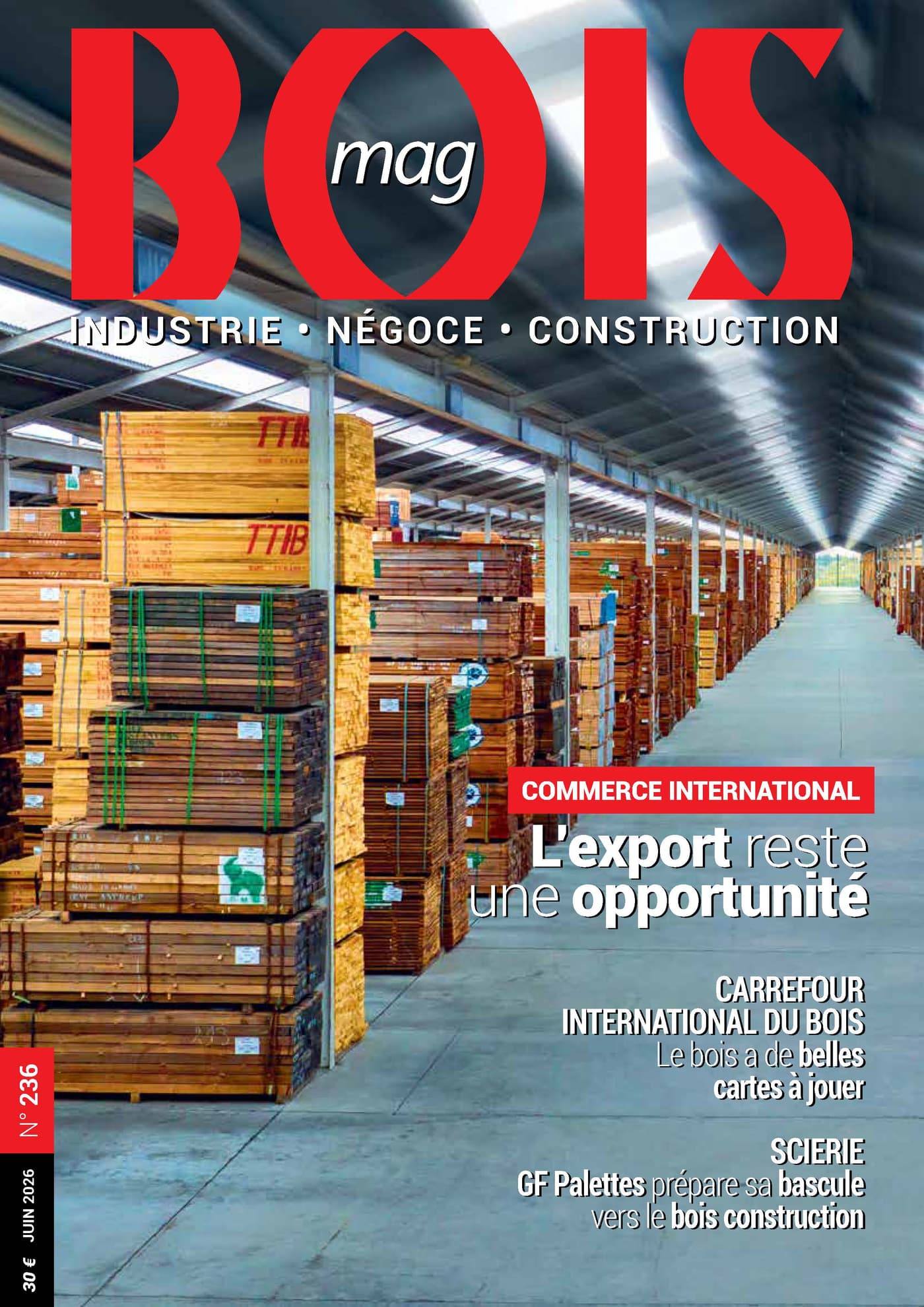
BOISmag 236
Le bois à l’interface des
équilibres mondiaux
À l’approche du Carrefour international du bois de Nantes, la filière forêt-bois sera au centre de toutes les attentions. En perpétuelle évolution, elle subit de plein fouet une pression commerciale et géopolitique constante. Un temps considéré comme un matériau local, à l’abri de l’agitation mondiale, le bois s’inscrit désormais dans un jeu bien plus large, où tensions internationales, commerciales et logistiques redessinent les équilibres. Les marchés ne réagissent plus uniquement à l’offre et à la demande, mais doivent s’adapter à toute une série de restrictions d’exportation, de fluctuations monétaires, de tactiques industrielles… L’Europe ajuste aussi ses positions, entre souveraineté et dépendance. Tandis que certaines zones traditionnellement exportatrices revoient leurs priorités pour sécuriser leurs propres besoins.
Dans ce contexte chahuté, la question de l’approvisionnement s’avère stratégique. Diversifier ses sources n’est plus un choix, mais une nécessité. Les entreprises doivent composer avec des flux moins prévisibles, des délais allongés et une volatilité accrue des disponibilités, même pour des essences historiquement stables. Sans oublier une pression persistante sur les coûts de transport. Le fret – maritime ou routier – devient aussi un levier de compétitivité pour les produits bois. Hausse des carburants, tensions logistiques, recomposition des routes commerciales : autant d’éléments qui pèsent directement sur les marges et bousculent les stratégies d’achat des professionnels.
Face à cette nouvelle donne, la filière bois montre une réelle capacité d’adaptation, mais elle doit désormais raisonner à une autre échelle : anticiper, sécuriser, arbitrer ! Dans ce paysage mouvant, le Carrefour international du bois prendra cette année une dimension particulière. Non plus seulement lieu de rencontres, il s’imposera comme un point d’observation privilégié pour décrypter les mutations à l’oeuvre dans un marché mondialisé qui n’a jamais été aussi exposé… ni aussi stratégique. Rendez-vous à Nantes !
Adèle Cazier